
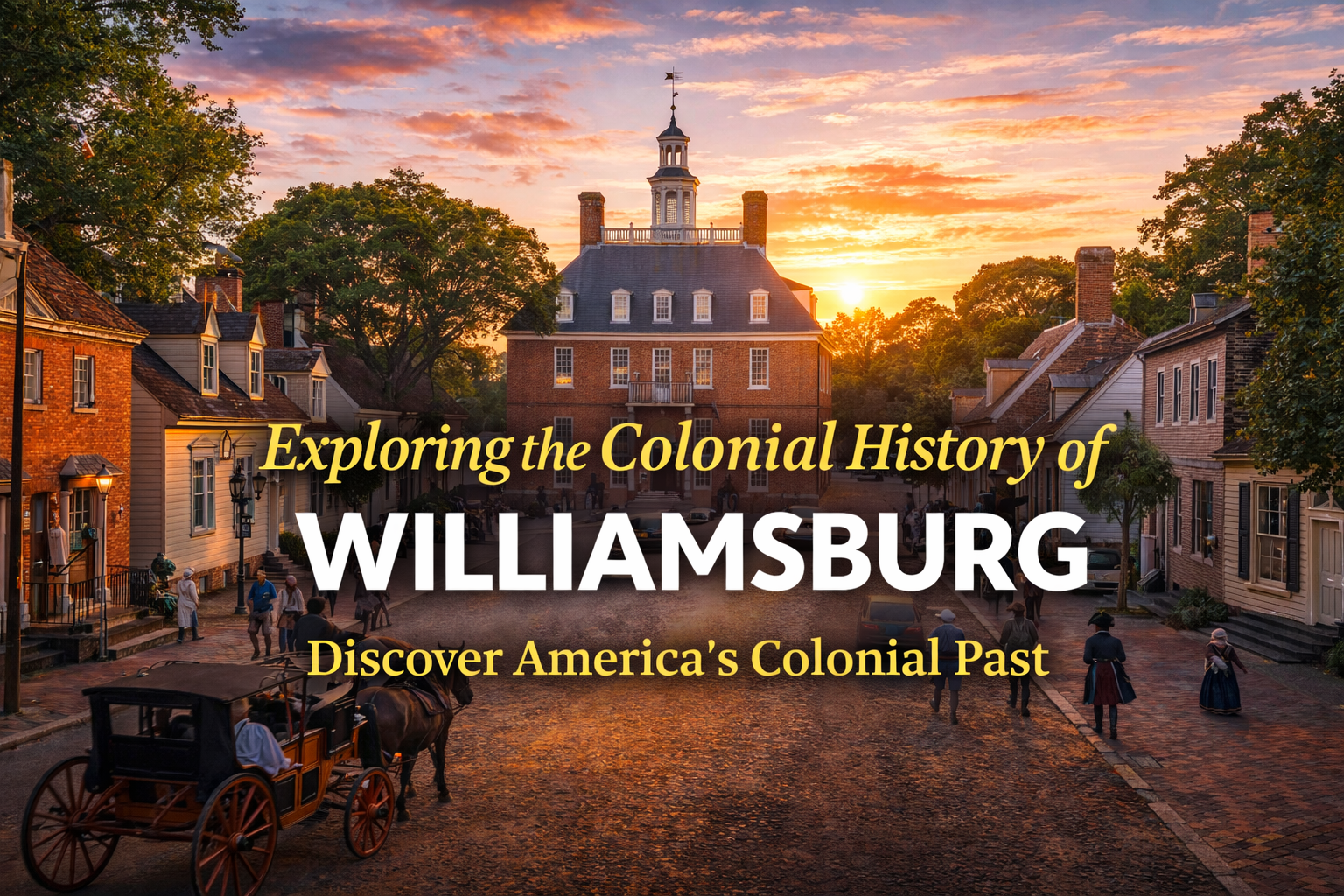
Williamsburg, located in the state of Virginia, is one of the most historically significant towns in the United States. The city played a central role during the colonial period and later became an important political center during the American Revolution. Today, Williamsburg is widely recognized for its carefully preserved colonial architecture and its role in illustrating early American life.
The town was founded in 1699 and served as the capital of the Virginia Colony for many decades. During this period, Williamsburg became an important center for government, education, and political debate in colonial America. Many influential figures who later shaped the formation of the United States lived, studied, or worked in Williamsburg.
The Founding of Williamsburg


Williamsburg was established near the earlier settlement of Middle Plantation and officially became the capital of the Virginia Colony in 1699. The town was strategically located between the James and York rivers, allowing easier transportation and communication within the colony.
As the capital, Williamsburg became the center of political activity in colonial Virginia. Government officials, merchants, and residents gathered in the town to discuss laws, trade, and colonial policies. Over time, the settlement developed into a structured town with government buildings, churches, taverns, and educational institutions.
Colonial Williamsburg Historic Area
Colonial Williamsburg

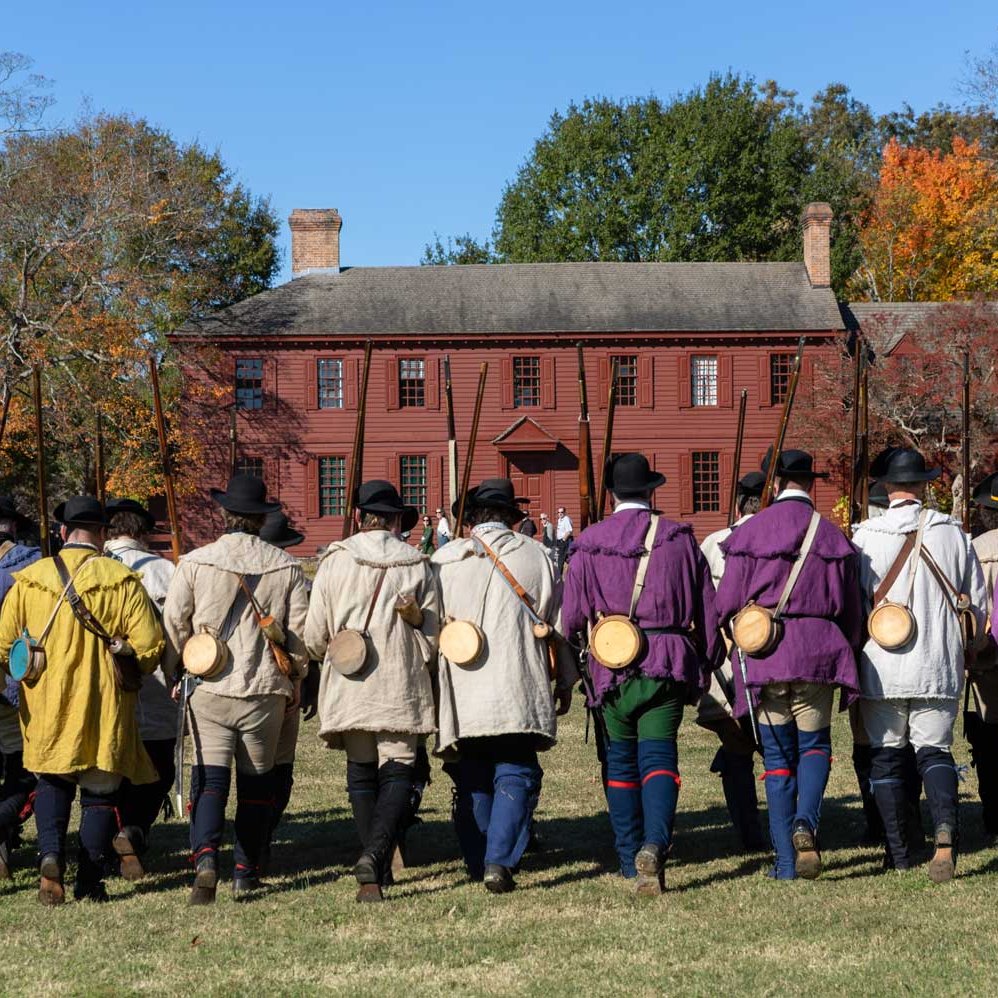

One of the most well-known historical areas in the city is Colonial Williamsburg. This district preserves numerous buildings that represent life during the eighteenth century in colonial America.
The area functions as a living history museum where historic structures have been restored to reflect their original appearance. Streets such as Duke of Gloucester Street contain government buildings, shops, homes, and meeting places that played roles in colonial society.
Through these preserved structures, Colonial Williamsburg provides insight into the daily life, government, and economic activities of the American colonies before independence.
Important Colonial Buildings
Governor’s Palace


The Governor’s Palace served as the official residence of the royal governors who administered the Virginia Colony on behalf of the British Crown. The palace became a symbol of British authority in the American colonies during the eighteenth century.
The building contained formal halls, administrative offices, and gardens that reflected the political importance of the colony. During the years leading up to the American Revolution, the palace also became a focal point of tensions between colonial leaders and British officials.
Today the structure has been reconstructed and stands as one of the most recognizable landmarks in Williamsburg.
The Capitol Building
Capitol at Colonial Williamsburg


Another important structure in Williamsburg is the Capitol building. This building served as the meeting place for the colonial government of Virginia.
Members of the colonial assembly gathered here to debate laws and policies that affected the colony. The building played a crucial role during the period when tensions between the American colonies and Great Britain were increasing.
Discussions and decisions that took place in Williamsburg helped influence the broader movement toward independence that eventually led to the American Revolution.
Education and Intellectual Life
Williamsburg also became an important educational center during the colonial period. One of the most notable institutions in the city is College of William & Mary.
Founded in 1693, the college is one of the oldest institutions of higher education in the United States. During the eighteenth century it educated many individuals who later became influential leaders in American politics and government.
The presence of this institution helped make Williamsburg an intellectual center in colonial Virginia.
Williamsburg’s Role in Early American History
Williamsburg played a key role in the political and social developments that led to the American Revolution. As the capital of the Virginia Colony, the town hosted debates, meetings, and legislative decisions that influenced colonial governance.
Many early discussions about independence and colonial rights took place in Williamsburg’s government buildings and public spaces. Because of this history, the city remains an important location for understanding how colonial America evolved into the United States.
Today Williamsburg continues to preserve its historical structures and cultural heritage, providing a detailed view of life during the colonial era and the political developments that helped shape the nation.