
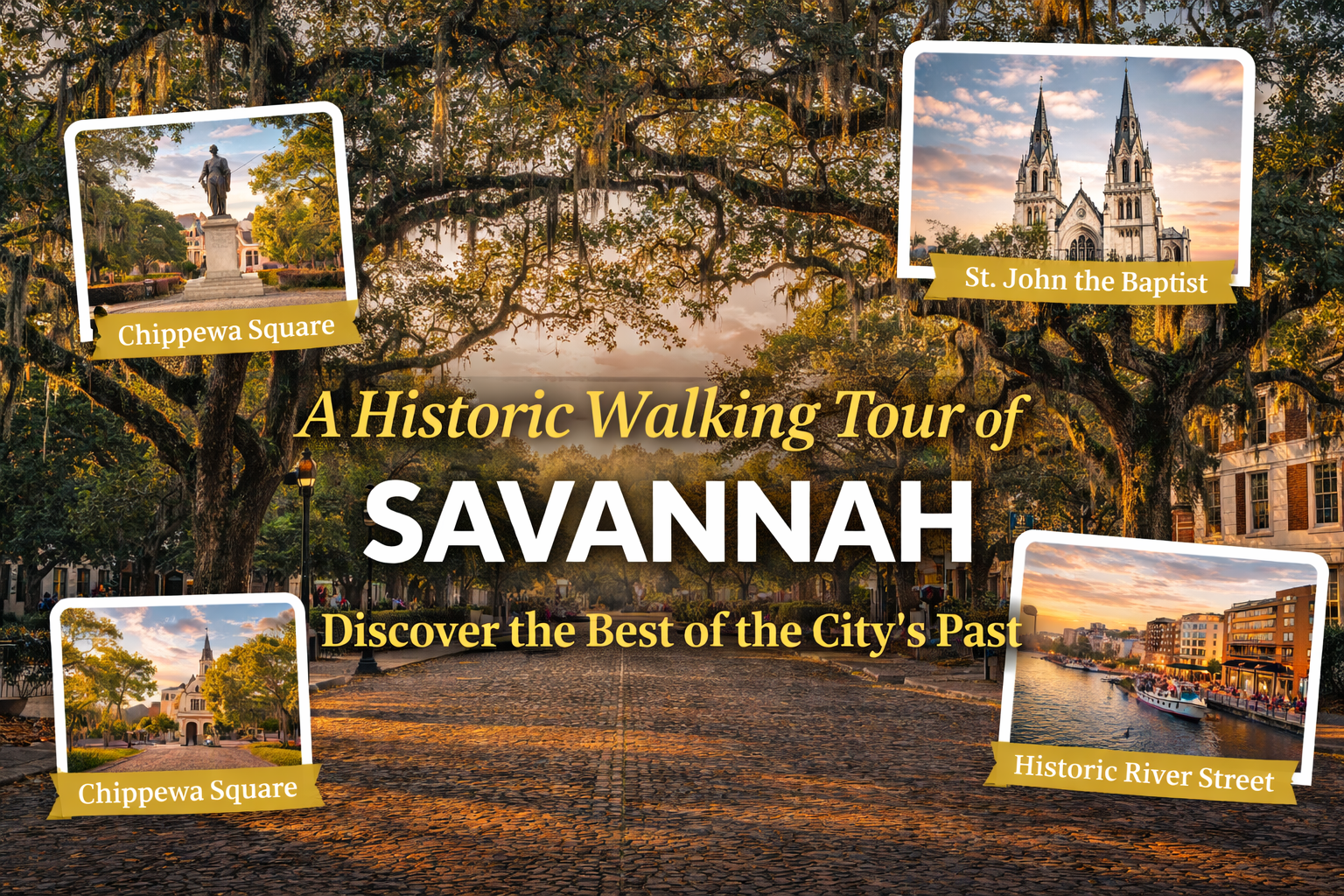
Savannah, located along the Savannah River in the state of Georgia, is one of the oldest cities in the southern United States. Founded in 1733, the city developed as the first capital of the Georgia colony and later became an important center for trade, culture, and political life in the region.
Today Savannah is widely recognized for its historic architecture, preserved public squares, and tree-lined streets covered with Spanish moss. Much of the city’s historic district remains intact, making it one of the largest preserved historic urban areas in the United States. Because of its well-planned layout and centuries-old buildings, Savannah offers a unique opportunity to explore early American urban design and colonial history through a walking tour of its historic streets.
The Founding of Savannah


Savannah was founded in 1733 by James Oglethorpe. Oglethorpe established the city as part of the British colony of Georgia, which served as a buffer between the southern English colonies and Spanish Florida.
One of the most distinctive aspects of Savannah is its carefully planned city layout. Oglethorpe designed the settlement around a series of public squares that would serve as community gathering places. This design created an organized pattern of streets and open spaces that still defines the historic district today.
The original plan included twenty-four public squares, many of which remain preserved. These squares continue to function as parks and historical landmarks within the city.
Historic Squares of Savannah
Chippewa Square

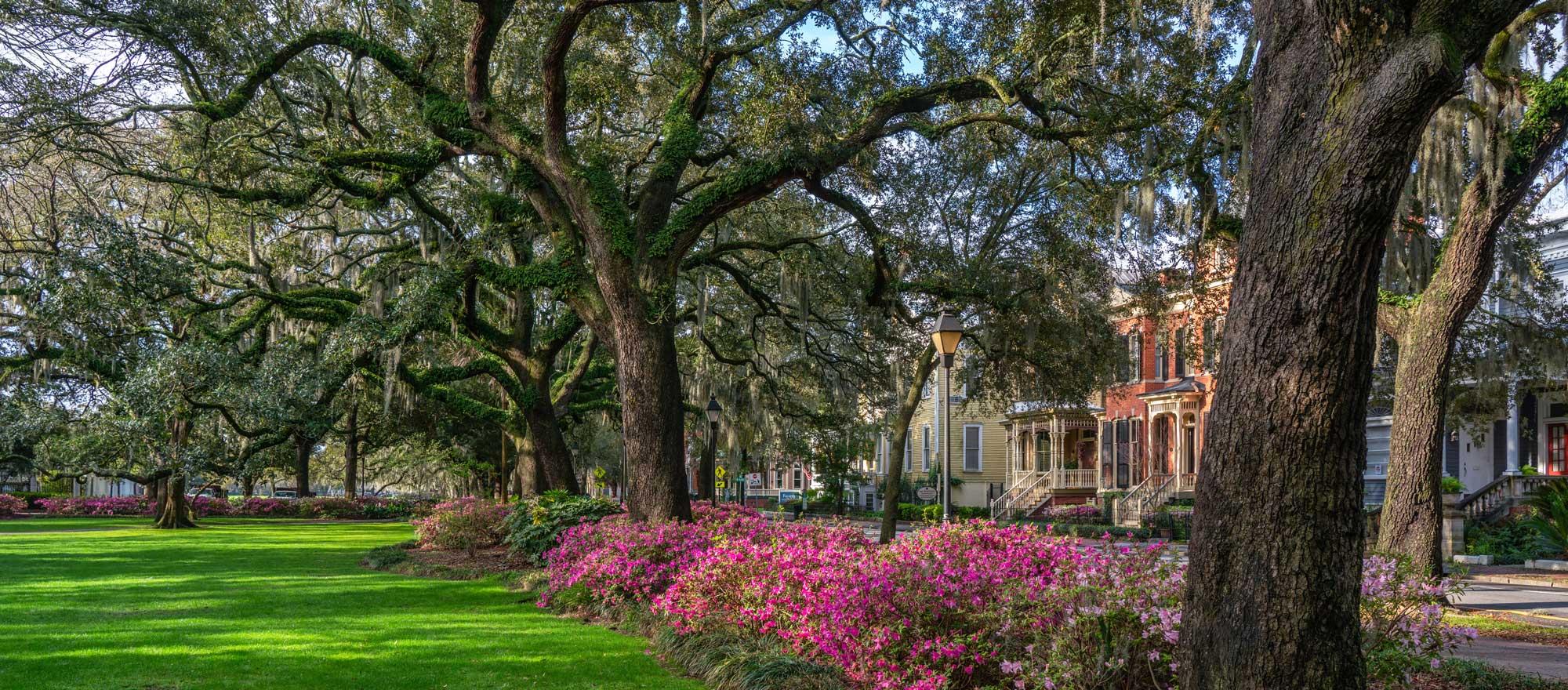

Chippewa Square is one of the most recognized public squares in Savannah’s historic district. The square contains a monument dedicated to James Oglethorpe, the founder of the Georgia colony.
Surrounded by historic buildings and shaded by large oak trees, the square represents the type of urban design that made Savannah unique among colonial American cities. The preserved square illustrates how public spaces were integrated into the city’s original layout.
The Cathedral Basilica of St. John the Baptist
Cathedral Basilica of St. John the Baptist


Another major landmark in Savannah is the Cathedral Basilica of St. John the Baptist. This historic church was completed in the nineteenth century and represents an example of Gothic Revival architecture in the United States.
The cathedral features tall spires, intricate stained-glass windows, and detailed interior decoration. Over time it has become one of the most prominent religious and architectural landmarks in Savannah’s historic district.
Savannah Riverfront
Savannah Historic River Street


Savannah’s riverfront area developed during the eighteenth and nineteenth centuries as an important port for shipping goods. The warehouses along the river stored cotton and other agricultural products that were exported through the port.
Today the area known as River Street still contains many of these historic warehouse buildings. The cobblestone streets and preserved structures provide insight into the city’s maritime trade history and its role as a major port in the southern United States.
Historic Homes and Architecture
Savannah is also known for its historic residential architecture. Many homes in the city’s historic district date back to the eighteenth and nineteenth centuries and represent architectural styles such as Georgian, Federal, and Greek Revival.
These preserved homes reflect the economic prosperity that Savannah experienced during the nineteenth century. Walking through the historic district reveals rows of historic houses, iron balconies, and tree-lined streets that contribute to the city’s distinctive character.
Also Visit :- Great Smoky Mountains National Park: History, Hiking, and Natural Wonders
Savannah’s Historical Legacy
Savannah holds an important place in the history of the American South. From its founding as a colonial settlement to its development as a major port city, the city has witnessed many stages of American history.
The preservation of its historic squares, churches, waterfront buildings, and residential architecture allows visitors and researchers to explore the development of one of the oldest planned cities in the United States. Savannah’s historic district remains a remarkable example of colonial urban planning and architectural preservation.