
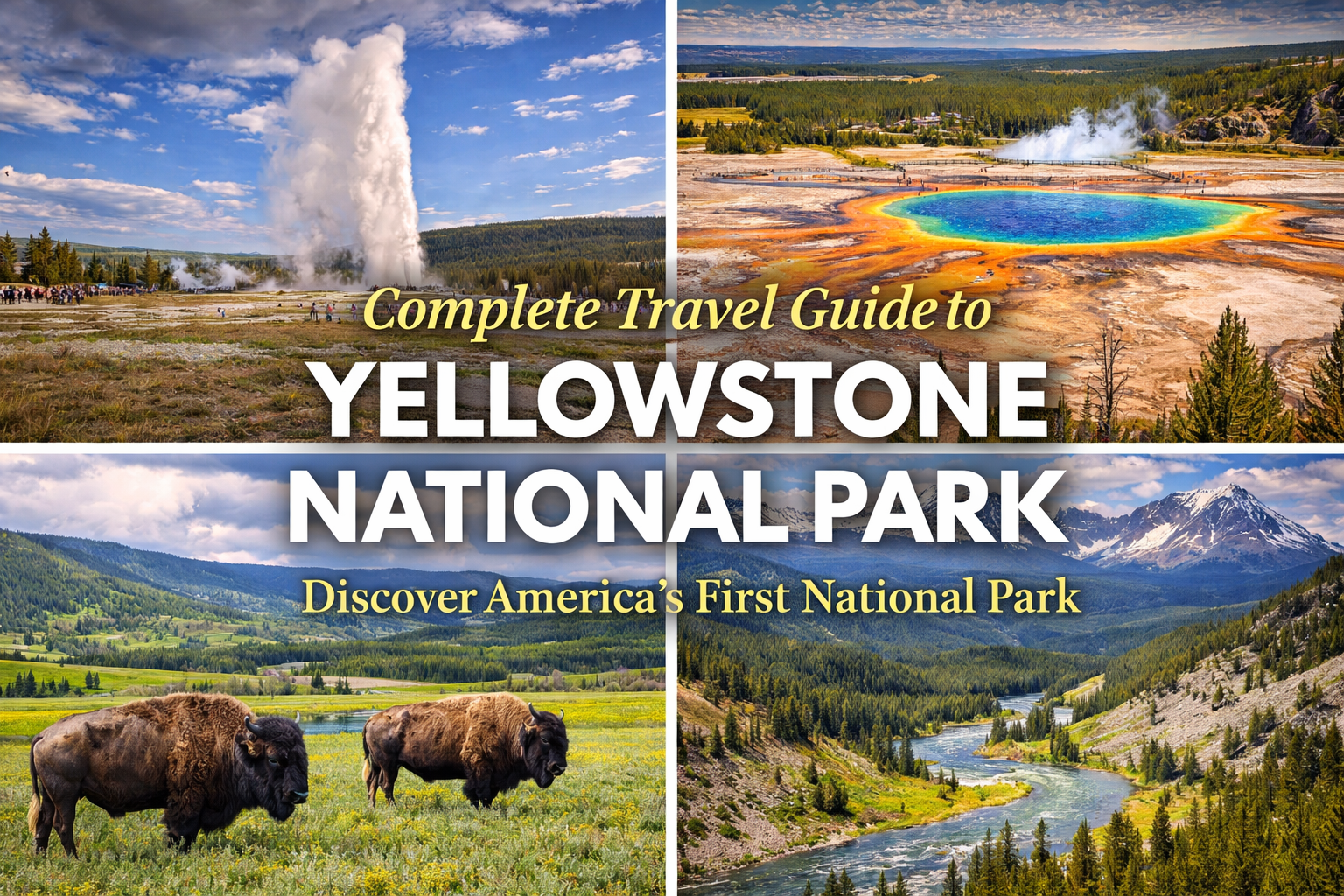
Yellowstone National Park is one of the most significant natural and historical landmarks in the United States. Established in 1872, it is widely recognized as the first national park in the world, marking an important step in the global conservation movement.
Located primarily in the state of Wyoming, with portions extending into Montana and Idaho, Yellowstone covers a vast area of forests, rivers, mountains, and geothermal features. The park is known for its unique geological activity, diverse wildlife, and its role in the early preservation of natural landscapes in North America.
The History of Yellowstone National Park


Before becoming a national park, the Yellowstone region was inhabited by Native American tribes for thousands of years. These communities used the land for hunting, fishing, and spiritual practices.
In the early nineteenth century, explorers and survey expeditions began documenting the region’s unusual geothermal features, including geysers, hot springs, and volcanic formations. Reports from these expeditions drew attention to the area’s unique natural characteristics.
In 1872, Yellowstone was officially designated as a national park by the United States government, becoming the first protected national park in the world. This decision established a model for conservation efforts that would later be adopted in many countries.
Geothermal Features and Natural Phenomena
Old Faithful


Old Faithful is one of the most well-known geysers in the world. It is famous for its relatively predictable eruptions, which shoot hot water and steam into the air.
The geyser is part of Yellowstone’s extensive geothermal system, which includes thousands of hot springs, mud pots, and geysers. These features are caused by volcanic activity beneath the Earth’s surface.
Grand Prismatic Spring


Grand Prismatic Spring is the largest hot spring in the United States and one of the most visually striking features in Yellowstone. The spring is known for its vibrant colors, which result from heat-loving microorganisms that thrive in the mineral-rich water.
The combination of geological activity and biological processes makes this site an important example of natural scientific phenomena.
Wildlife in Yellowstone
Yellowstone National Park is also known for its diverse wildlife. The park provides habitat for a wide range of species that have lived in the region for centuries.
Some of the most commonly observed animals include:
- American bison
- Gray wolf
- Grizzly bear
- Elk
These species are part of a complex ecosystem that has been studied extensively by scientists. Conservation efforts within the park have helped protect these animals and maintain ecological balance.
Yellowstone’s Geological Significance
Yellowstone sits on top of a massive volcanic system known as the Yellowstone Caldera. This geological formation is responsible for the park’s geothermal features and ongoing volcanic activity.
The presence of geysers, hot springs, and thermal vents indicates that the region remains geologically active. Scientists continue to study Yellowstone to better understand volcanic systems and geothermal processes.
Yellowstone’s Role in Conservation History
Yellowstone National Park represents one of the earliest efforts to protect natural landscapes for public benefit. The creation of the park in 1872 set a precedent for future conservation policies in the United States and around the world.
The establishment of Yellowstone helped inspire the creation of additional national parks and protected areas, forming the foundation of modern conservation practices.
Also Read :- A Historic Walking Tour of Savannah
Importance of Yellowstone Today
Today Yellowstone remains one of the most studied and visited national parks in the United States. Its combination of geological features, wildlife, and historical importance makes it a unique location for research and education.
The park continues to serve as an example of how natural environments can be preserved while allowing people to explore and learn about the Earth’s natural systems. Yellowstone’s historical significance and natural features make it one of the most important protected landscapes in the world.